From “If it fits, put on your clothes and run” to “She, coming close to me?”
It was one of those sweltering summer nights in Manhattan — the kind where the pavement radiates heat, the air itself seems to shimmer, and the city pulses with a mix of anticipation, heartbreak, and joy. The air stuck with humidity, and every breath felt like breathing through hot soup.
The scent of New York City in summer?
A heady cocktail of steamy asphalt, hot dog stands, late-night pizza, designer perfume, sweat, and the ever-present undertone of car exhaust and ambition.
It was a night where hopeful expectations danced with broken ones — all wrapped in the city’s electric heartbeat. Every street corner felt like something was about to happen: a spontaneous laugh, a random encounter, memories that stay with you forever.
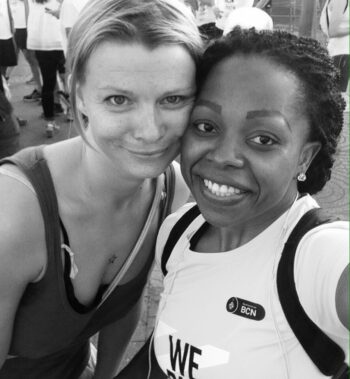
The protagonists of this night:
Two young women, mid-twenties, friends.
One: Black, with beautifully braided hair, Harlem.
The other: white, blonde, Sylvi.
Ladies night.
After hours on the dance floor, drenched in sweat and happy, they decide to change locations — their goal: to hit as many spots as possible in one night.
Harlem is already outside, her head tilted slightly toward the sky, as if trying to steal a bit of oxygen from the evening air — but the air is thick, humid, heavy.
Sylvi follows, pausing briefly as she leaves, reaching into a glass on the bar to grab a branded New York City condom —
when suddenly a voice from the bouncer shouts:
“Put that down!”
She freezes.
Looks at the condom in her hand in disbelief, then at the bouncer.
“Why shouldn’t I use protection during sex?” she asks, confused.
Harlem watches the whole scene with a knowing smirk, crossing her arms.
Sylvi takes a few steps toward the burly bouncer.
His eyes sparkle in that mischievous way you only find in New York.
He leans in slightly, hugs Sylvi, and whispers in her ear:
“Let’s just say: if he puts it on — and it fits — put your clothes back on… and run.”
The first hug of the night, where white, female skin meets black, male skin —
a moment of teasing, friendly protection.
The second hug, later that night in the subway station, carries a very different feeling. One that sinks in differently — that goes under the skin and stays there.
A moment that leaves nothing but quiet question marks about how and why difference shapes the way we move through the world.
After a successful bar crawl, both are tired, waiting for their trains.
On the opposite platform, a train arrives going in the other direction.
Within seconds, Harlem cheerfully yells: “Hello guys!” and runs toward two younger men who just stepped off the train.
They start talking, and after a while, Sylvi thinks, why not join their conversation?
She follows her friend’s lead and opens her arms to hug them — something very natural to her.
She tries to hug the man standing closest to her.
He steps back, almost in shock, unsure how to respond.
An awkward silence falls, and her puzzled expression meets a shy:
“Someone with your skin color would never hug us.”
The men are black.
Two hugs in one night.
Same city. Same humidity. Different realities.
One carried laughter.
The other carried history.
In a city built on closeness — crowded trains, packed bars, shoulders brushing on sidewalks — it’s strange how distance can still exist.
And sometimes all it takes is an outstretched arm to realize how far apart — or how close — we actually are.
Maybe we just need to learn how to step toward each other without assuming we already know the story.